|
|
|
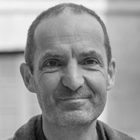
Alain Aspect
Université Paris-Saclay, France
Plenary Talk
A former student of ENS Cachan (now ENS Paris‑Saclay), Alain Aspect is a professor at the Institut d’Optique–Université Paris‑Saclay, an honorary professor at École Polytechnique, and an emeritus research director at CNRS. He is a member of the French Academy of Sciences, the Academy of Technologies, and numerous foreign scientific academies.
His work on fundamental quantum phenomena involving photons and atoms has earned him many awards in France and abroad, including the 2022 Nobel Prize in Physics for his “experiments with entangled photons, establishing the violation of Bell inequalities and paving the way for quantum information science.” After carrying out this research at the Institut d’Optique between 1975 and 1982, he joined Claude Cohen‑Tannoudji’s group at ENS Paris, exploring laser cooling of atoms (Nobel Prize 1997). In 1993, he created at the Institut d’Optique a research group active in the field of quantum atomic optics and neutral‑atom quantum simulators.
|
|
|
|
|
 |
| PLENARY |
|
 |
| . |
|
|
Antoine Browaeys
Institut d'Optique / CNRS, France
Plenary Talk
Antoine Browaeys is an experimental physicist specializing in quantum physics. He works at the Charles Fabry Laboratory of the Institut d’Optique. His research aims to understand the quantum properties of systems composed of many particles in situations that remain beyond the reach of current theoretical or numerical methods. These are often cases in which interactions between particles play the dominant role.
One way to make progress is to build synthetic quantum systems atom by atom and control their interactions using lasers in order to study model many-body systems. In the laboratory, this involves cooling, trapping, manipulating, and observing individual atoms. The goal is to develop an intuitive understanding of these interacting systems and to stimulate theoretical advances that can be applied to the understading of phenomena such as quantum magnetism and high-temperature superconductivity.
Beyond these fundamental research challenges, such synthetic systems, also known as quantum simulators, could help solve practical problems of logistical or industrial interest. These prospects led to the creation of the startup PASQAL, of which Antoine Browaeys is one of the co-founders.
|
|
|
|
|
|
|
|
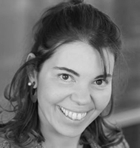
Ignacio Cirac
Max Planck Institute of Quantum Optics, Germany
Plenary Talk
Ignacio Cirac graduated in Theoretical Physics at the Complutense University of Madrid (Spain) in 1988, and gained his PhD in 1991 at the same university. Between 1991 and 1996, he was Associate Professor at the University of Castilla-La Mancha (Spain), and spent eighteen months at the University of Colorado (US) working with Peter Zoller. From 1996 until 2001 he was Professor of Theoretical Physics at the University of Innsbruck (Austria). Since 2001 he is a member of the Max Planck Society and director at the Max Planck Institute of Quantum Optics (Garching, Germany). In 2002 he also became honorary professor at the Technical University of Munich.
His field of research is quantum information theory. With his collaborators, he introduced the first proposals of quantum computers, simulators, and repeaters with atoms, and developed a theory of tensor networks to describe quantum many-body systems.
|
|
|
|
|
 |
| KEYNOTE |
|
|
| . |
|
|
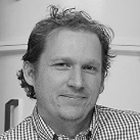
Francesca Ferlaino
Universität Innsbruck, Austria
Keynote – Plenary Session
Francesca Ferlaino is born on 23th December 1977 in Napoli, Italy. There, she studied physics at the University of Federico II and received her master degree in 2000 for a theoretical work on Bose-Einstein condensates, jointly conducted in Naples and at the International School for Advanced Studies (SISSA) in Trieste.
As PhD student, she then re-directed her research interest towards experimental physics and started her PhD study at the University of Florence and at the European Laboratory for Non-linear Spectroscopy (LENS) in Florence under the supervision of Prof. M. Inguscio. At LENS, Francesca was involved in the first realization of quantum gases mixture of different alkali atomic species. After receiving her PhD degree in 2004, Francesca enjoyed to work at LENS for few years more as research associate.
In 2007, she moved to Austria first as a visiting scientist in the group of Prof. Grimm, then as postdoctoral Lise-Meitner fellow focusing on few-body and Efimov physics, and finally she received a full professorship in 2014. At the beginning, her stay in Innsbruck was just planned for 3 months. The 3 months became 6. The 6 months 1 year. 1 year easily doubled to 2 years, and the 2 years doubled again, and again :). In 2009, thanks to a START-Prize (FWF) and an ERC Starting Grant, Francesca could establish her independent research group. She funded the Dipolar Quantum Gas Group and started the so-called “ERBIUM” experiment, realizing the world-first Bose-Einstein condensate of Er in 2012.
Since 2014, Francesca is Full Professor at the University of Innsbruck and Scientific Director at the Institute for Quantum Optics and Quantum Information (IQOQI) of the Austrian Academy of Science (ÖAW). During the last years, she was awardee of numerous prestigious prizes and distinctions, including the Feltrinelli prize, the Alexander-von-Humboldt Professorship, the Science Prize of the City of Innsbruck, the Ignaz L. Lieben Prize, and the Fritz-Kohlrausch Prize for experimental physics. In addition, she received the START Prize, one ERC-Starting, one ERC-Consolidator grant and one one ERC-Advanced grant.
|
|
|
|
|
 |
| INDUSTRIAL FORUM |
|
|
| . |
|
|
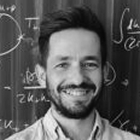
Jay M. Gambetta
IBM, USA
Keynote - Industrial Forum
Dr. Jay M. Gambetta is the Vice President in charge of IBM’s overall Quantum initiative. He was named as an IBM Fellow in 2018 for his leadership in advancing superconducting quantum computing and establishing IBM’s quantum strategy to bring quantum computing to the world, and to make the world quantum safe. Under his leadership, IBM was first to demonstrate a cloud-based quantum computing platform; a platform that has grown to become the predominant quantum service utilized by 579,000 users to run over 3 trillion quantum circuits. These users include 302 members of the IBM Quantum Network, representing forward-thinking academic, industry, and governmental organizations focused on building a quantum-native ecosystem. IBM Quantum continues to expand in the market by providing Quantum as a Service utilizing the IBM Quantum System One and Two series of devices with over 20 quantum systems available online, building the foundations of the quantum industry. In addition, he was responsible for the creation and early development of Qiskit; the leading open-source quantum computing software development kit, allowing users to build, optimize, and execute quantum circuits on hardware from a multitude of quantum service providers. Dr. Gambetta received his Ph.D. in Physics from Griffith University in Australia. He is a Fellow of the American Physical Society, IEEE Fellow, and has over 130 publications in the field of quantum information science with over 37,000 citations.
|
|
|
|
|
 |
| WORKSHOP 2 |
|
|
| . |
|
|
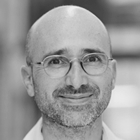
Adolfo Grushin
DIPC, Spain
Invited – Workshop 2: Quantum matter: theory & simulations
|
|
|
|
|
 |
| INVITED |
|
|
| . |
|
|
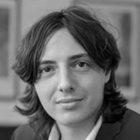
Benjamin Huard
CNRS/ENS DE LYON, France
Invited – Plenary Session
|
|
|
|
|
 |
| WORKSHOP 2 |
|
|
| . |
|
|
Jose Lado
Aalto University, Finland
Invited – Workshop 2: Quantum matter: theory & simulations
Jose Lado is an Assistant Professor at Aalto University, in Finland, working on the theory of quantum materials. His research focuses on designing emergent phenomena in quantum materials, combining materials science, quantum many-body physics, and machine learning. In particular, he focuses on engineering systems where electronic correlations and topology yield exotic physics such as topological excitations and emerging fractionalized particles, ultimately to design universal topological quantum computers. He often works in collaboration with experimental groups studying quantum materials in general, and two-dimensional materials in particular. He was awarded the Early Career Award by the European Physical Society in 2023, the ERC Consolidator Grant in 2025, and since 2026 he is the vice-director of the Finnish Center of Excellence in Quantum Materials
|
|
|
|
|
 |
| INDUSTRIAL FORUM |
|
|
| . |
|
|
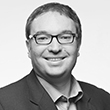
Roman Orus
Multiverse Computing & DIPC, Spain
Keynote - Industrial Forum
I am the Scientific Director (CSO) and Cofounder of Multiverse Computing, as well as Ikerbasque research professor at the Donostia International Physics Center (DIPC) in San Sebastián, Spain. After obtaining my degree and PhD in Physics at the University of Barcelona in 2006, I worked as a research fellow at the University of Queensland, Australia, and the Max Planck Institute of Quantum Optics, Germany, as well as a junior professor at Johannes Gutenberg-Universität in Mainz, Germany. I was also visiting professor at the Universitè Paul Sabatier – CNRS, France, and at the DIPC. My research has been recognized by several awards, including a Marie Curie Incoming International Fellowship, and the Early Career Prize (2014) by the European Physical Society. I have written more than 80 scientific articles about quantum research cited around 5500 times, and I am also honorary member of the steering board of the journal Quantum, member of the ‘Quantum for Quants’ (Q4Q) commission of the Quantum World Association, partner at Entanglement Partners, and president of the Specialized Group on Quantum Information at the Spanish Royal Society of Physics.
|
|
|
|
|
 |
| KEYNOTE |
|
|
| . |
|
|
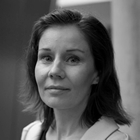
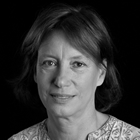
Törmä Päivi
Aalto University, Finland
Keynote – Plenary Session
|
|
|
|
|
 |
| WORKSHOP 3 |
|
|
| . |
|
|
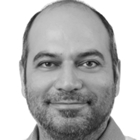
Anna Sanpera Trigueros
UAB/ICREA, Spain
Invited – Workshop 3: Quantum Information
I obtain my Physics degree from the Universitat Autòmoma de Barcelona 1986. From 1988 to 1992 I was a doctoral fellow (FPI) of the Ministry of Education and Science at the Autonomous University of Barcelona and defended my PhD in 1992. In 1993, I moved to Oxford University, fas a research fellow and 1994-1995 as a Fleming Fellow. In 1996, I was European postdoctoral research fellow in CEA-Saclay. In 1998, I was research fellow at Leibninz University, Hannover (Germany), where I habitlitated in 2002 and became assistant professor. Since 2005 I am an ICREA research professor. My research interests involve quantum information theory, in particular entanglement theory, but also to quantum gases, condensed matter, out-of-equilibrium open quantum systems and quantum neural networks. I am also interested and involved in education and the popularization of science to society. Otherwise, I am fond of literature, sports and children.
|
|
|
|
|
 |
| INVITED |
|
|
| . |
|
|
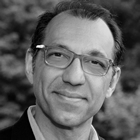
Javad Shabani
New York University, USA
Invited – Plenary Session
Dr. Javad Shabani is Professor of Physics and Electrical and Computer Engineering, and Director of the Quantum Institute at New York University. He received his PhD from Princeton University. After two years of research on semiconductor-based qubits at Harvard University, he joined UC Santa Barbara. There, he worked closely with Microsoft research on hybrid semiconductors/superconductors heterostructures to study topological superconductivity. His group recently pioneered hyperdoped superconducting germanium as a CMOS-compatible platform for quantum devices.
|
|
|
|
|
 |
| KEYNOTE |
|
|
| . |
|
|
Ali Yazdani
Princeton University, USA
Keynote – Plenary Session
Ali Yazdani is the James S. McDonnell Distinguished University Professor of Physics at Princeton University and Co-Director of the Princeton Quantum Initiative. He is known for his research in advancing our understanding of emergent quantum phenomena by application and development of high-resolution microscopy techniques to directly visualize highly entangled quantum states of matter.
Yazdani graduated from UC Berkeley with a degree in physics and from Stanford University in 1995 with a Ph.D. in applied physics. After working as a postdoctoral scientist at IBM, he started his own independent research group at the University of Illinois in Urbana-Champaign before joining Princeton University's Department of Physics in 2005. He has held visiting professorships at Stanford and at Cambridge University (Trinity College) in the UK and has been a Loeb Lecturer at Harvard.
|
|
|
|
|
| |
|
|